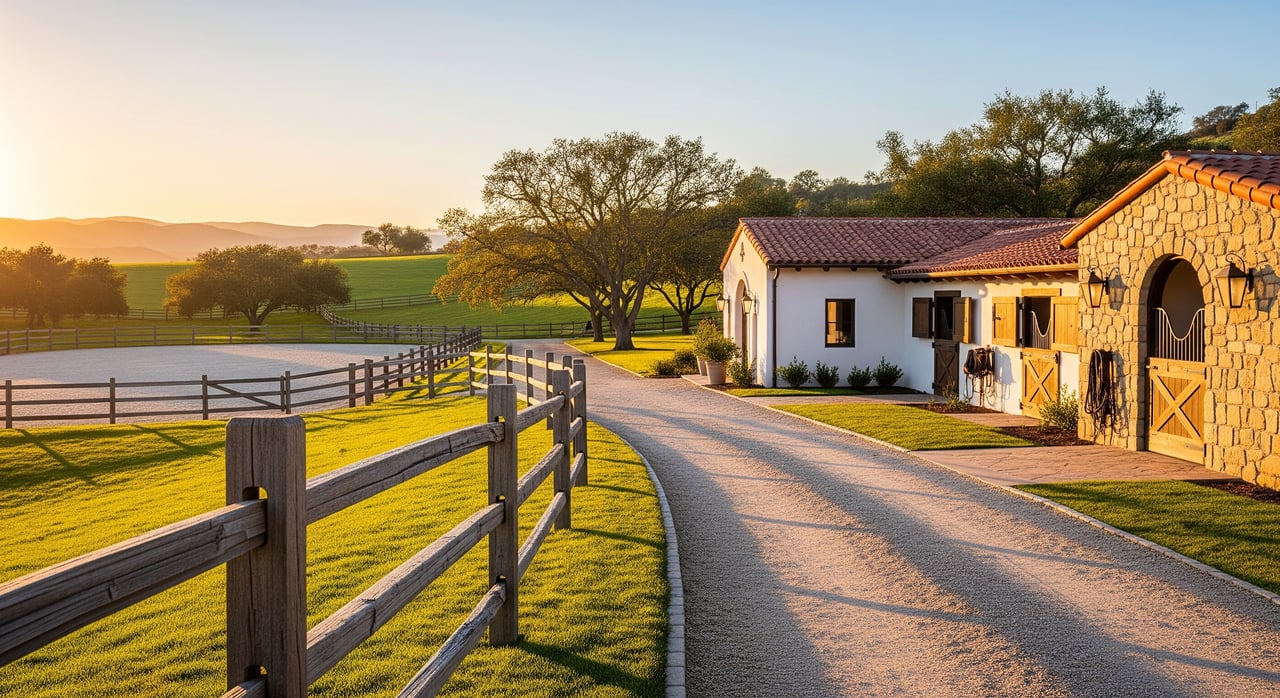
Your Guide to the Rancho Santa Fe Equestrian Lifestyle
December 18, 2025
December 18, 2025
Thinking about waking up to the soft rhythm of hoofbeats and miles of shaded trails? In Rancho Santa Fe’s 92067, the equestrian lifestyle is woven into daily life, from barn chores to sunset rides. If you are exploring horse-friendly properties here, you want practical guidance on features, permits, costs, and how to evaluate trail access. This local guide gives you a clear, actionable framework to buy with confidence. Let’s dive in.
Rancho Santa Fe was planned with a rural, estate feel that supports horses and open space. Large parcels, generous setbacks, and a history of bridle paths create a natural foundation for riding and on-site care. Many properties offer direct or nearby access to private trails, but trail ownership and use vary from parcel to parcel. Always confirm access through the Rancho Santa Fe Association and recorded easements before you buy.
You will also find strong support services in and around 92067. Trainers, boarding facilities, veterinarians, farriers, and feed suppliers are established across North County San Diego. That local ecosystem makes daily care and long-term horse health more manageable.
Look at usable acreage, not just total lot size. Consider how the barn sits relative to the home, where paddocks can be placed, and whether you have safe trailer maneuvering and parking. Plan for turnout patterns that fit your horses and management style. If trail access is a priority, evaluate proximity and safe approach routes.
Well-designed facilities usually include appropriate stall count and size, a tack room, feed storage with good ventilation, a wash rack, and a clean manure storage area. Confirm electrical and water hookups at the barn, and ask for documentation on any prior improvements. Building permits and septic capacity can be limiting factors, so verify existing permits and current code compliance.
Arena footing varies, from sand and silica blends to synthetic mixes. Quality arenas have a proper base, grading, and drainage to maintain consistent footing through seasons. Orientation matters for sun, wind, and neighboring setbacks. If a property already has an arena, ask about the footing type, base construction, and last maintenance.
Horse-safe fencing often uses post-and-board, pipe, or mesh with a visible top rail. Look for smooth materials with no protrusions. Cross-fencing supports rotational turnout and quarantine when needed. Walk each fence line to check condition and gate placement.
Water availability and pressure are critical for barns, wash racks, and irrigation. Properties in 92067 may be served by a public provider such as the Santa Fe Irrigation District or a private well; verify the source and service capacity. Septic system permits can impact future expansion and even day-to-day use. Confirm electrical capacity for lighting, pumps, and any electric fencing.
Trail access is one of Rancho Santa Fe’s signature features, but access is not guaranteed for every lot. Determine whether nearby trails are private or public, and confirm recorded easements and any rules on hours and permitted uses. Some areas prohibit motorized vehicles and limit commercial activity. A title review and Association confirmation are essential before relying on any claimed access.
Keeping horses at home brings rhythms and responsibilities. Expect hay deliveries, manure removal, early feeding, and occasional lesson or trainer visits. Be mindful of community standards around noise, site cleanliness, and general barn activity. Rancho Santa Fe Association covenants and county rules may set limits on the number of animals, manure storage practices, and the scope of any commercial activity from a residence.
Owning horses is a significant, ongoing commitment. Key cost drivers include feed and hay, boarding or hired care, routine and emergency veterinary services, farrier work, bedding, arena and property maintenance, and insurance. Local market conditions in San Diego often sit on the higher end of national averages for hay, labor, and service rates. For budgeting accuracy, obtain current quotes from multiple local providers and build in a cushion for seasonal shifts.
San Diego County zoning, parcel size, and Rancho Santa Fe covenants influence animal counts and how you can use the property. If you plan to board horses for others or offer lessons for pay, expect additional restrictions. Align your plans with both county code and Association rules before you commit.
New barns, arena construction, grading, and related improvements typically require building permits. Manure and wastewater management can trigger environmental or health department reviews. Start early with Planning & Development Services to confirm requirements and timelines, and keep all documentation organized for future resale.
Many equestrian owners choose farm and ranch homeowners policies and equine liability coverage, especially if any instruction, boarding, or events take place on-site. Lenders and title companies may ask for disclosures on equine structures and recorded easements. A consultation with your insurance advisor can help match coverage to your risk profile and planned activities.
Boarding choices range from full board with daily care and turnout to partial board, pasture-only, and self-care arrangements. Amenities can include arenas, round pens, wash racks, and on-site trainers. Availability and pricing change with demand and the level of service, so get on waitlists early if a specific program is important to you.
Across Rancho Santa Fe and nearby coastal and inland areas, you will find trainers for disciplines like dressage, show jumping, eventing, and general horsemanship. Local barns and organizations host clinics, schooling days, and occasional shows. Check facility calendars and ask for recent client references to find a good fit.
The North County region is served by established equine veterinarians, emergency and mobile services, and farriers. You will also find feed and tack suppliers, trailer repair, and hauling companies in the broader market. Map out your support team early to make routine care and emergencies simpler.
Useful discovery paths include local barn manager referrals, Rancho Santa Fe Association resources for members, and regional equine directories. Your real estate team can also introduce you to trusted service providers. Build a shortlist, vet insurance and scheduling, and align expectations before move-in.
Equestrian infrastructure and clear trail access can be powerful selling points for a specific buyer segment. The best resale stories feature documented, permitted improvements and up-to-date maintenance records. Unpermitted structures or unclear easements can complicate lending and narrow the buyer pool, so keep paperwork organized from day one.
Buying or selling an equestrian property in Rancho Santa Fe takes local insight and meticulous execution. You deserve a team that understands 92067’s covenants, trail systems, and permitting, and can connect you with the right barns, trainers, and service providers. Booth Properties pairs lifelong North County knowledge with white-glove marketing, private inventory access, and Compass tools to make complex equestrian moves feel straightforward.
If you are ready to tour horse-friendly estates or prep your property for market, let’s talk about your goals and the details that matter most. Reach out to Booth Properties for a personalized consultation.
Stay up to date on the latest real estate trends.


We pride ourselves in providing personalized solutions that bring our clients closer to their dream properties and enhance their long-term wealth. Contact us today to find out how we can be of assistance to you!